


; ?>/theme/images/logo.svg)
Introduction: One Size Does Not Fit All in AI
As Artificial Intelligence becomes more available, businesses face an important decision: Should they use off-the-shelf AI tools or invest in custom AI software solutions?
Both options can provide value. However, choosing the wrong one can waste budgets, limit growth, or result in solutions that do not meet real business needs. It’s crucial for companies to understand the trade-offs between these two options to use AI strategically instead of just tactically.
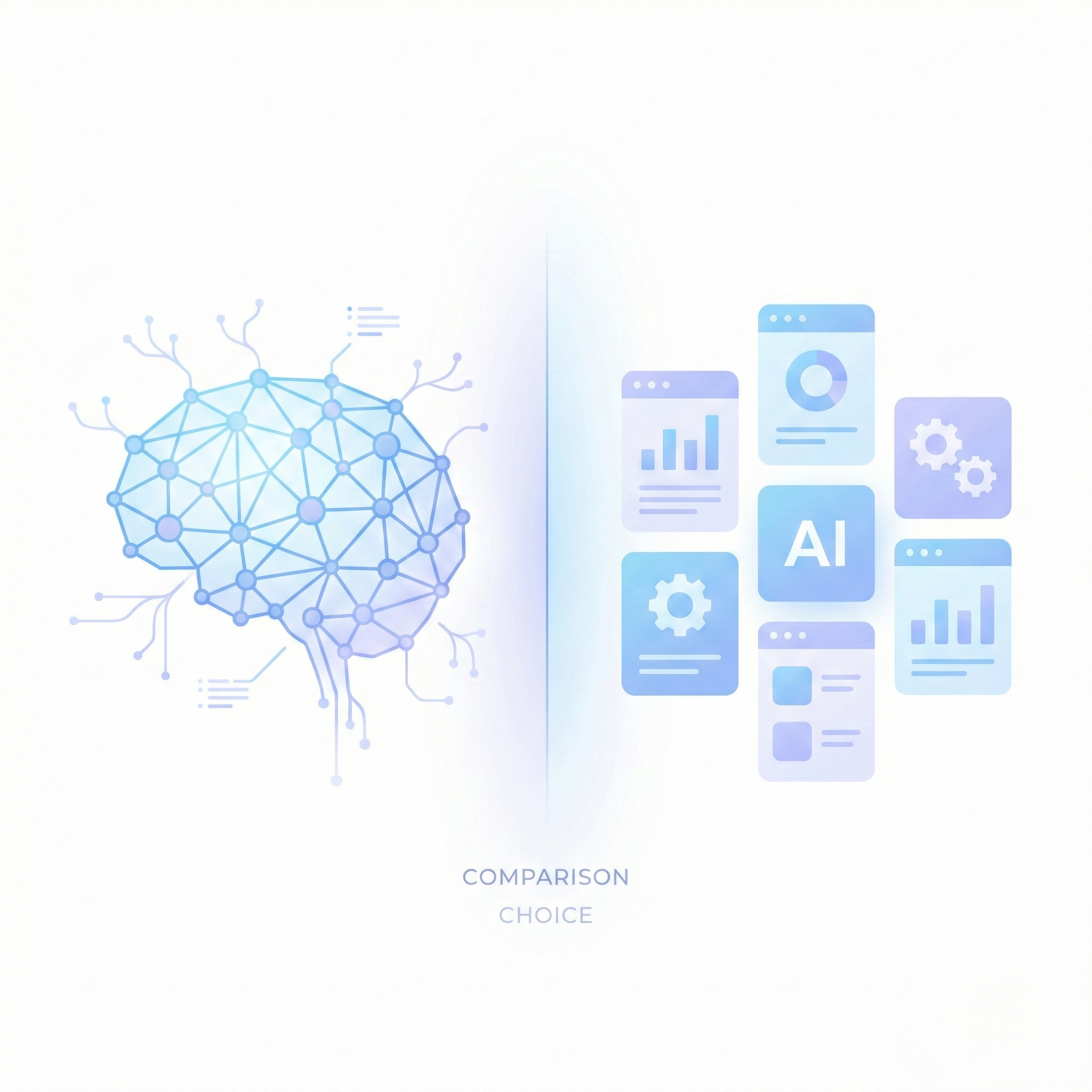
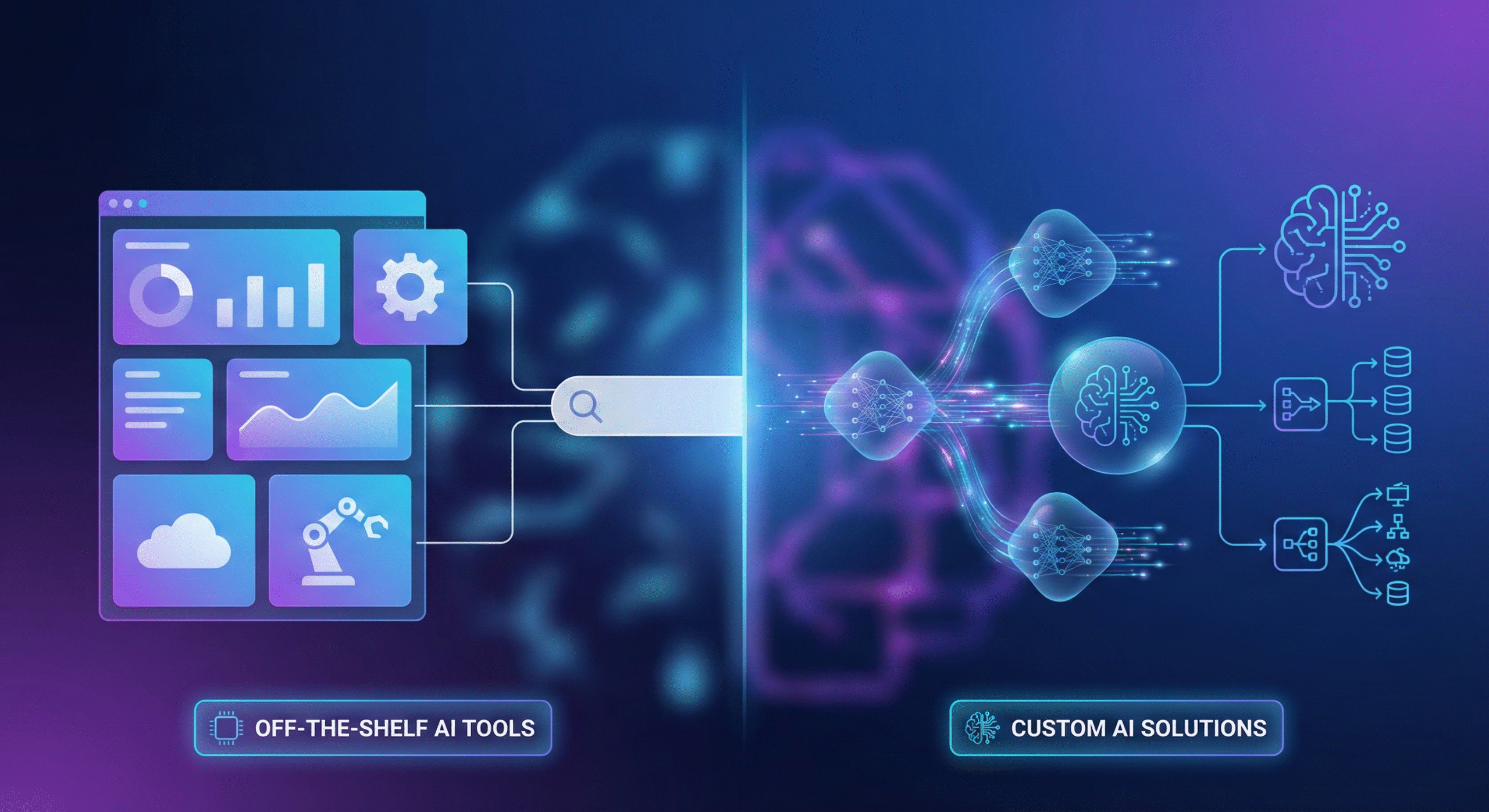
This article examines the differences between custom AI solutions and off-the-shelf AI tools. It helps decision-makers figure out which approach best fits their operational, technical, and long-term goals
What Are Off-the-Shelf AI Tools?
Off-the-shelf AI tools are ready-made solutions designed to address common business challenges. Examples include:
AI-powered CRM features
Chatbots and customer support automation platforms
Marketing analytics and recommendation engines
Document processing and OCR tools
Fraud detection or forecasting SaaS products
These tools are typically:
Subscription-based
Ready for deployment with minimal setup
Made for broad use across different industries
For many organizations, off-the-shelf AI tools are the first step into AI adoption.
What Are Custom AI Solutions?
Custom AI solutions are created specifically for a company’s unique processes, data, and strategic goals.
They involve:
Designing AI models around proprietary data
Integrating closely with internal systems
Tailoring workflows, logic, and outputs to exact business needs
Building scalable, secure, and maintainable architectures
Custom AI isn’t just about models; it’s about AI-driven software systems that evolve with the business.
Speed vs Strategic Fit
One major difference between these approaches is how quickly they provide value.
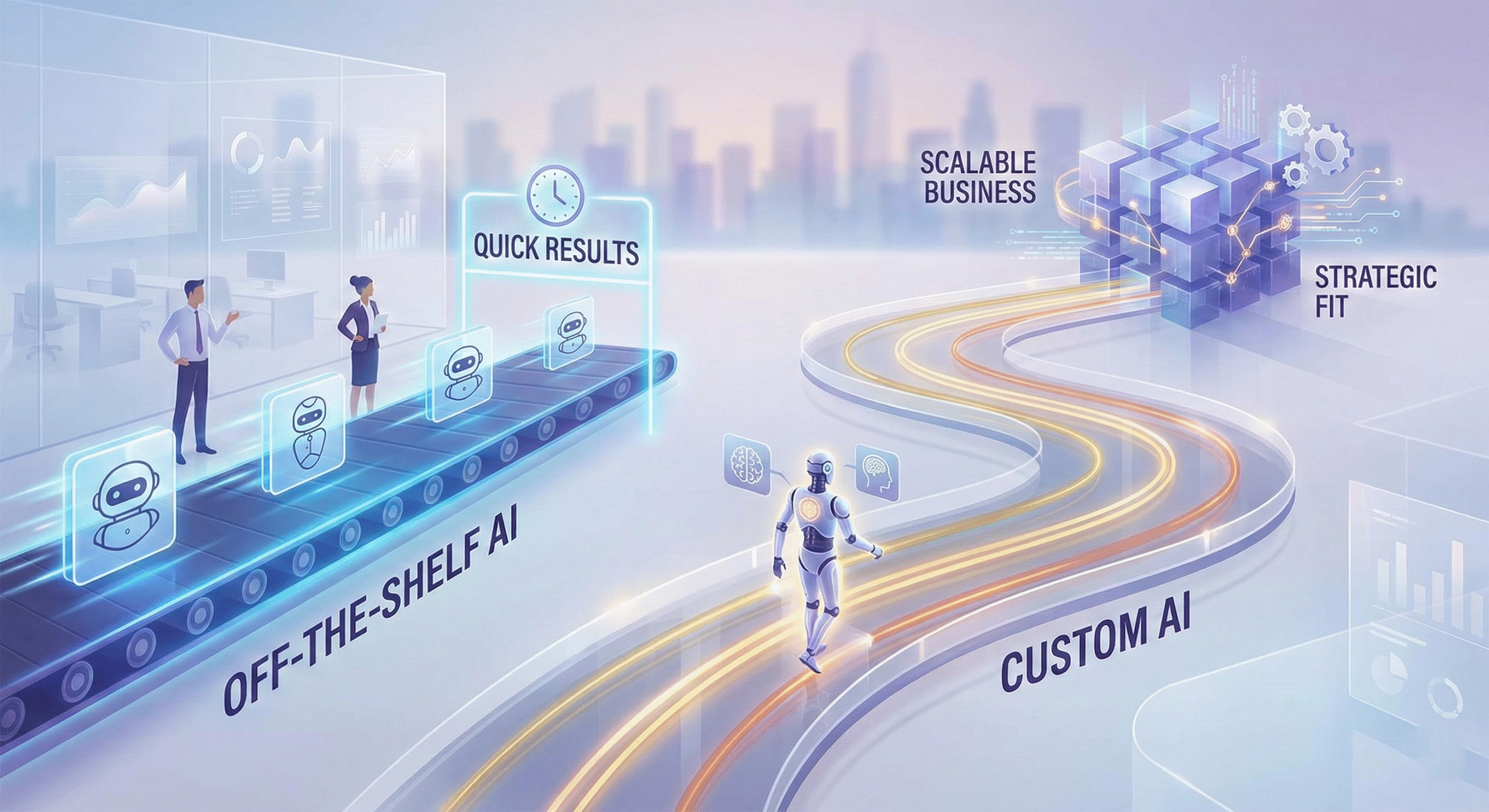
Off-the-shelf tools:
Deploy faster
Require minimal development effort
Offer immediate functionality
Custom AI solutions:
Have a longer design and development phase
Require data preparation and technical planning
Deliver a closer alignment with business workflows
For short-term benefits or specific cases, speed is important. For long-term changes, strategic fit becomes crucial.
Flexibility and Scalability
AI needs change as businesses grow.
Off-the-shelf tools have limitations from:
Fixed feature sets
Vendor roadmaps
Limited customization options
Usage-based pricing that can quickly increase costs
Custom AI solutions provide:
Full control over features and logic
The ability to evolve models and workflows
Integration across departments and systems
Scalability based on real usage patterns
As operations become more complex, flexibility often determines whether AI remains useful or turns into a bottleneck.
Data Ownership and Competitive Advantage
Data is one of a company’s most valuable assets.
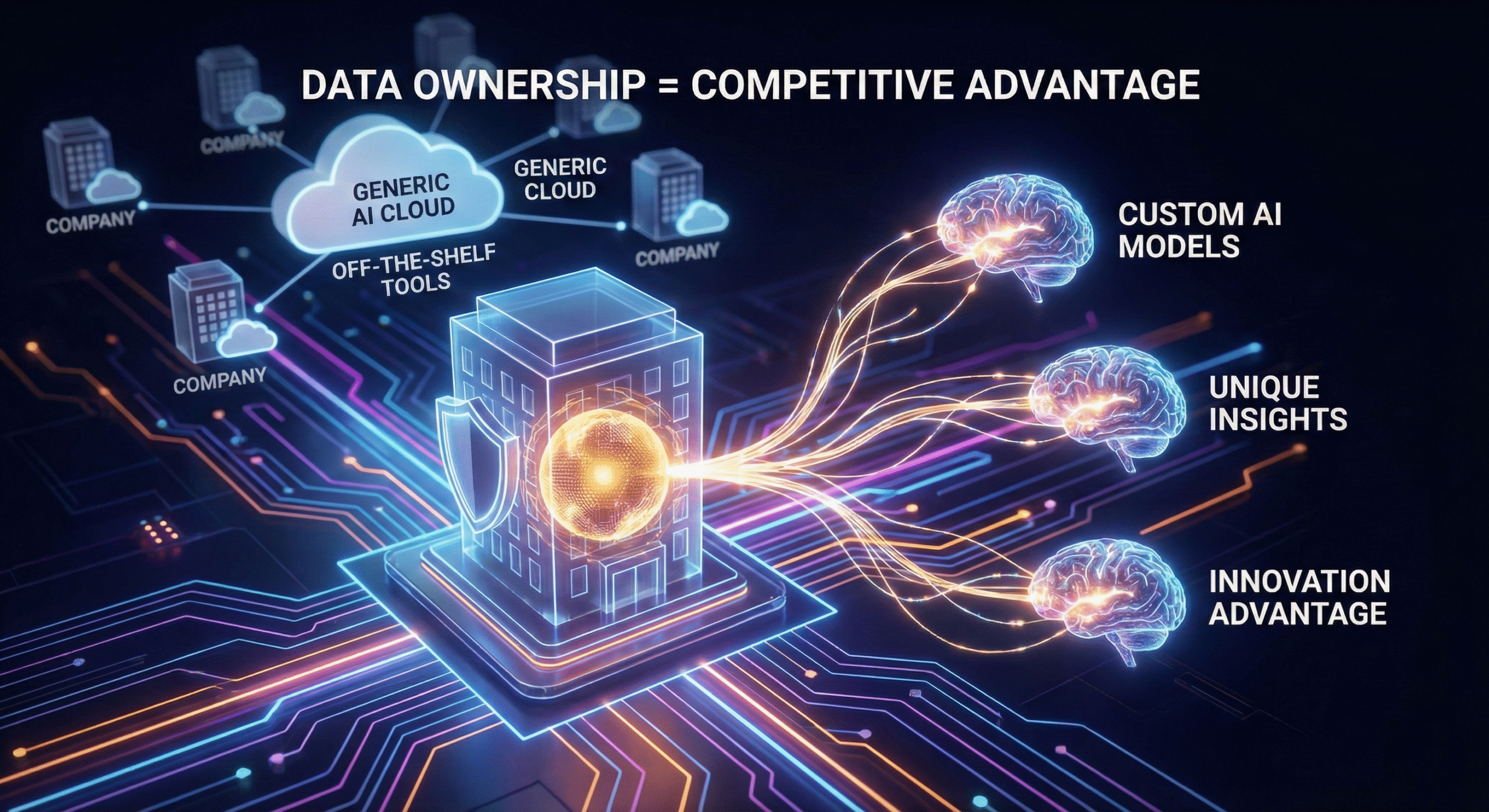
With off-the-shelf tools:
Data may be processed outside the organization
Custom insights can be limited
Differentiation is tough since competitors may use the same tools
With custom AI:
Proprietary data is fully utilized
Models learn from company-specific behavior
AI becomes a source of competitive edge, not just efficiency
Organizations seeking differentiation often view custom AI as an investment in their unique knowledge.
Integration With Existing Systems
Enterprise environments are often complex.
Off-the-shelf tools may struggle to:
Integrate deeply with legacy systems
Support complicated workflows
Adapt to non-standard processes
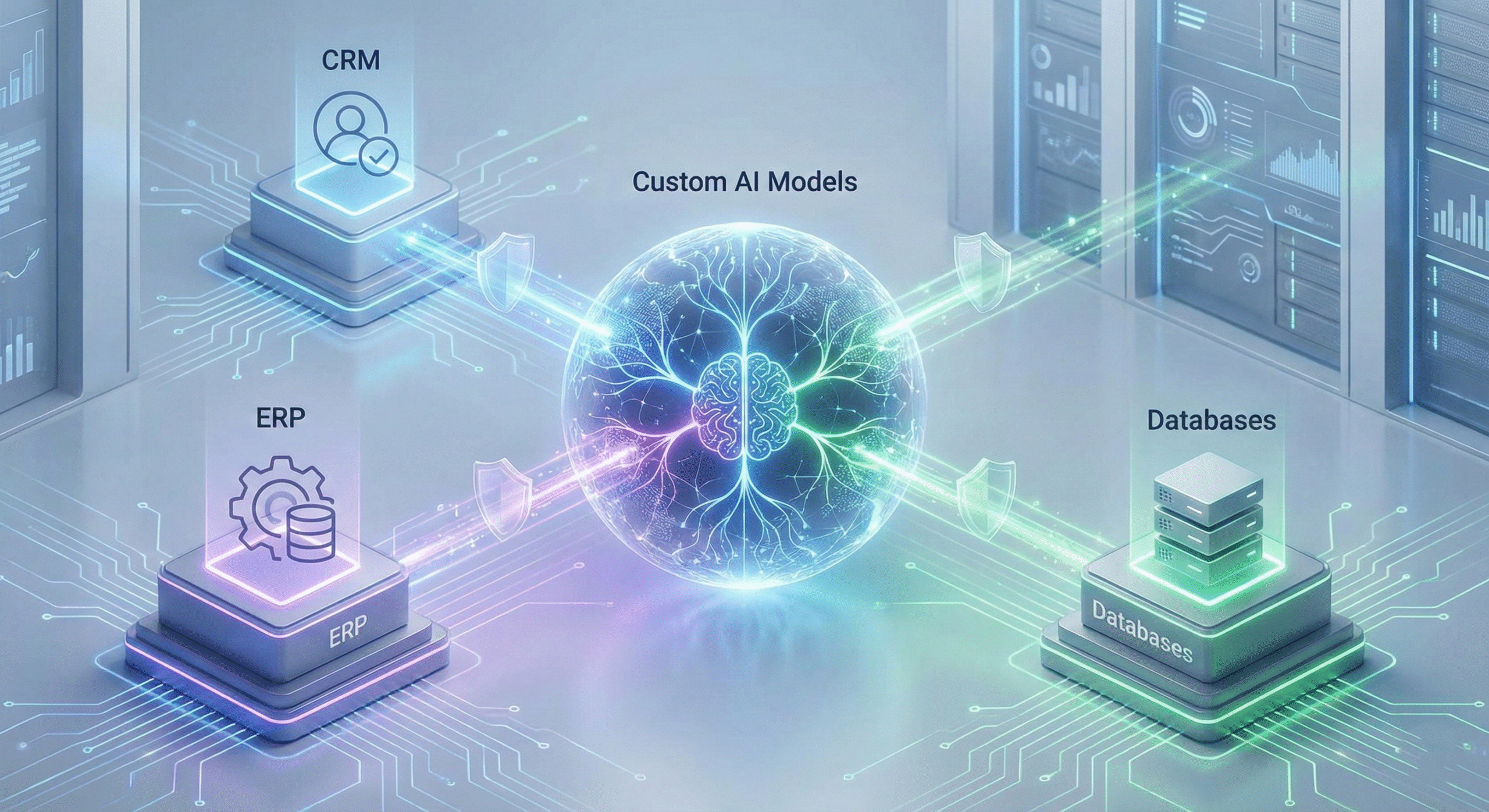
Custom AI solutions aim to:
Integrate smoothly with ERP, CRM, and internal platforms
Support custom APIs and data flows
Align with existing security and compliance standards
In many cases, the true cost of off-the-shelf tools becomes clear during integration, not licensing.
Cost Considerations: Short-Term vs Long-Term
At first glance, off-the-shelf AI tools seem more cost-effective.
However, long-term costs can include:
Rising subscription fees
Usage-based pricing at scale
Customization limits needing workarounds
Vendor lock-in risks
Custom AI solutions require:
A higher initial investment
Lower ongoing costs as usage increases
Complete ownership of the system
Predictable long-term expenses
The crucial comparison is not the initial cost, but the total cost of ownership.
Governance, Security, and Compliance
As AI systems affect key business decisions, governance is vital.

Off-the-shelf tools may:
Offer limited insight into model behavior
Restrict auditing options
Use generic compliance standards
Custom AI solutions allow for:
Full auditability of data and decisions
Tailored access control and security policies
Compliance with industry and regional regulations
Greater control over bias reduction and explainability
For regulated industries, custom AI often becomes a necessity rather than just a preference.
When Off-the-Shelf AI Makes Sense
Off-the-shelf AI tools are a good choice when:
The use case is common and well-defined
Speed is more important than customization
AI is not key to competitive differentiation
Internal data complexity is low
Budgets or timelines are tight
They are ideal for experimentation, validation, and tactical improvements.
When Custom AI Is the Better Choice
Custom AI solutions work better when:
AI is central to business strategy
Processes are complex or unique
Data is proprietary and valuable
Long-term scalability is essential
Integration with multiple systems is necessary
AI-driven decisions affect core operations
In these situations, AI becomes a fundamental capability rather than just a feature.
Conclusion: Choosing the Right AI Path
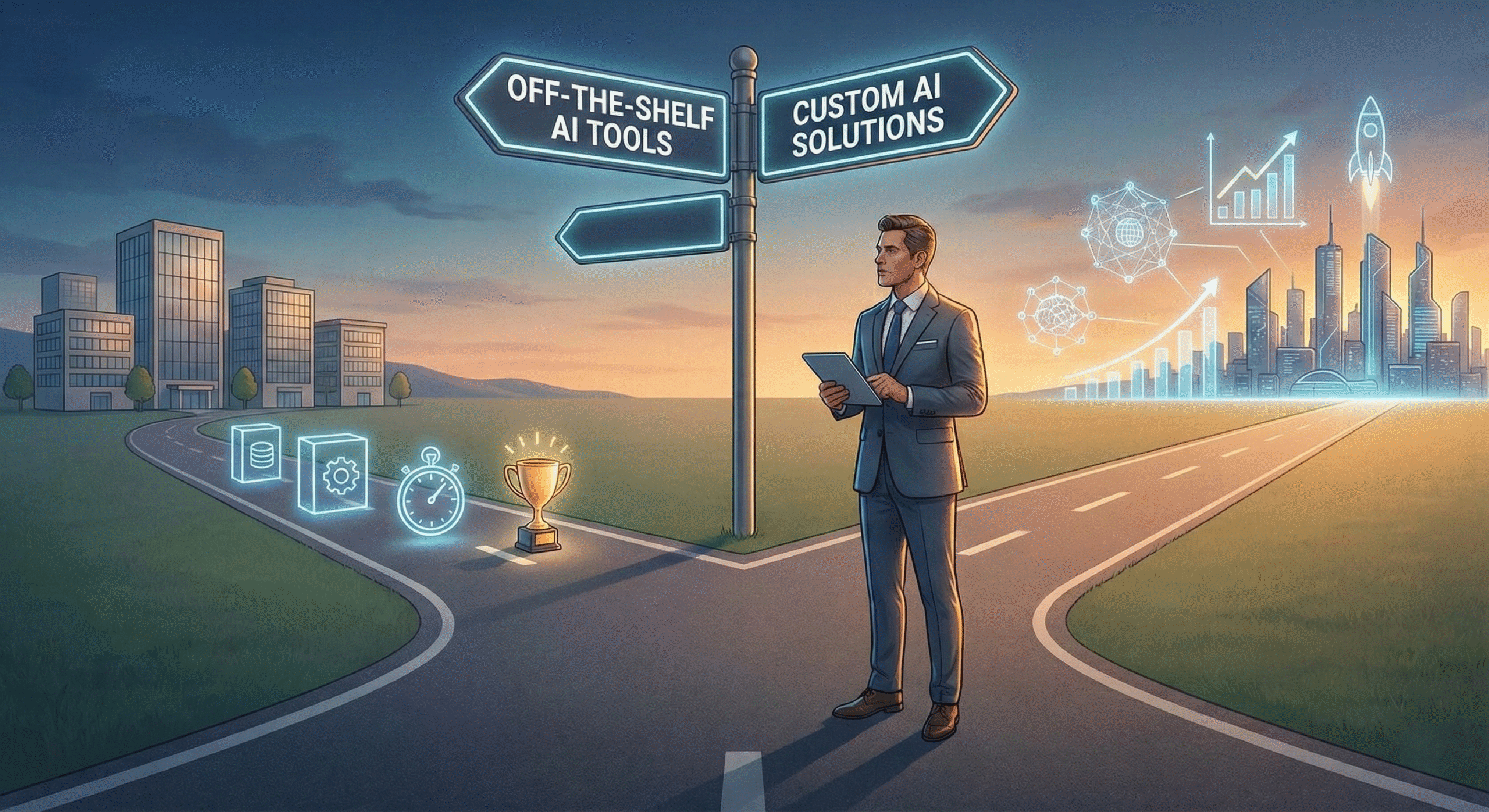
There is no one-size-fits-all answer to the custom vs. off-the-shelf debate. The right choice depends on business maturity, goals, data readiness, and long-term vision.
Many organizations start with off-the-shelf tools and move to custom AI as their needs grow. Others take a hybrid approach, combining ready-made solutions with custom AI where differentiation is most important.
What matters is viewing AI not as a trend, but as a strategic software investment that should grow alongside the business.