



; ?>/theme/images/logo.svg)
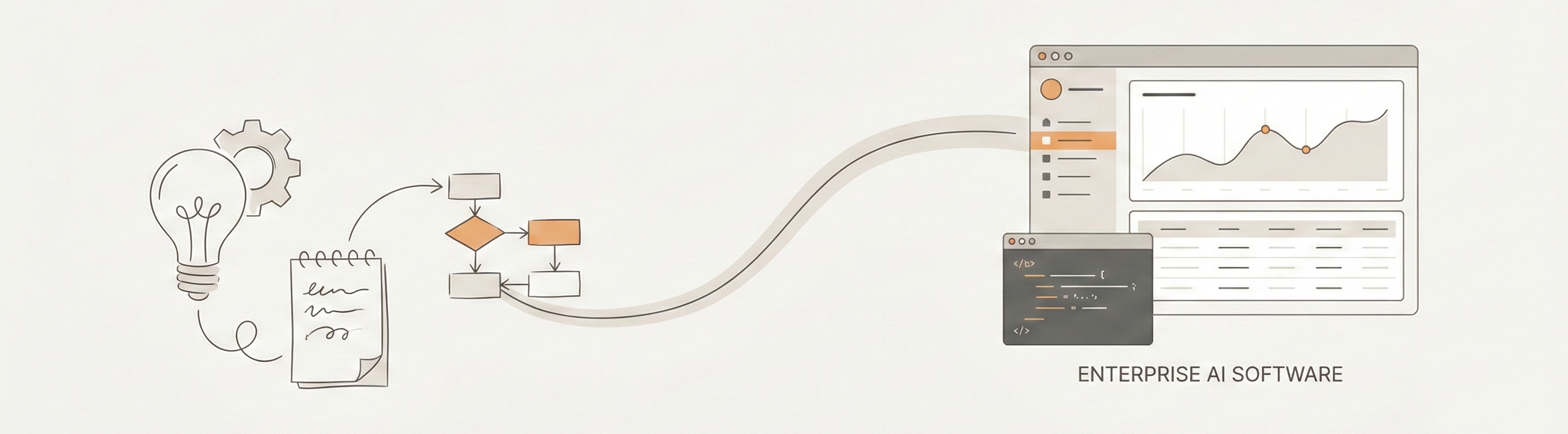
Introduction: Why AI Success Is About Execution, Not Hype
Artificial Intelligence has moved beyond experimentation. For many businesses, the challenge is no longer whether to use AI, but how to turn an idea into a reliable, scalable, enterprise-grade solution.
While off-the-shelf AI tools can deliver quick wins, long-term competitive advantage often comes from custom AI-powered software—solutions designed around real business processes, integrated into existing systems, and built to scale securely.
This article explains how AI-powered software solutions are developed end to end: from identifying the right use case to deploying and maintaining AI systems in production environments.
From Business Problem to AI Opportunity
Successful AI projects always start with a business objective, not a model.
Common enterprise-driven AI use cases include:
Automating repetitive operational workflows
Improving forecasting and planning accuracy
Enhancing customer experience through personalization
Detecting risks, anomalies, or inefficiencies early
Supporting data-driven decision-making
At this stage, the focus is on:
Defining measurable outcomes (cost reduction, time savings, accuracy improvements)
Understanding operational constraints
Identifying where AI adds value compared to traditional software logic
Not every problem requires AI. A critical part of AI solution design is recognizing when machine learning provides a real advantage—and when simpler automation is sufficient.
Data Readiness: The Foundation of Every AI System
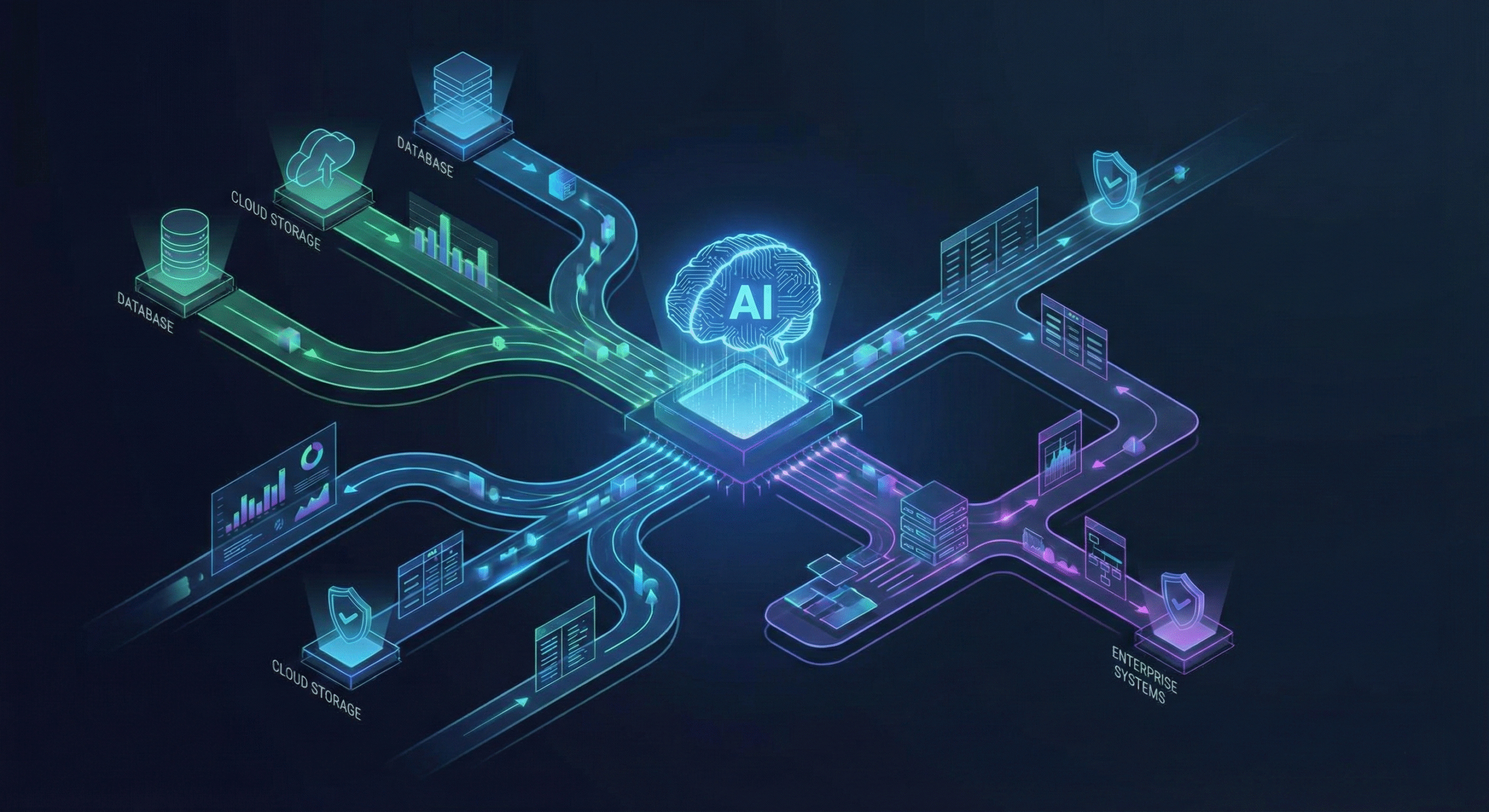
Data is the backbone of AI-powered software. Before any model is built, enterprises must evaluate:
Data availability: Is sufficient historical data accessible?
Data quality: Is the data consistent, accurate, and relevant?
Data ownership and security: Who controls the data, and how is it protected?
Data pipelines: How data is collected, processed, and updated in real time
In many cases, preparing data infrastructure requires:
Integrating multiple internal systems
Cleaning and normalizing raw data
Designing scalable data storage and processing architectures
This phase often determines the success or failure of the entire AI initiative.
Choosing the Right AI Approach
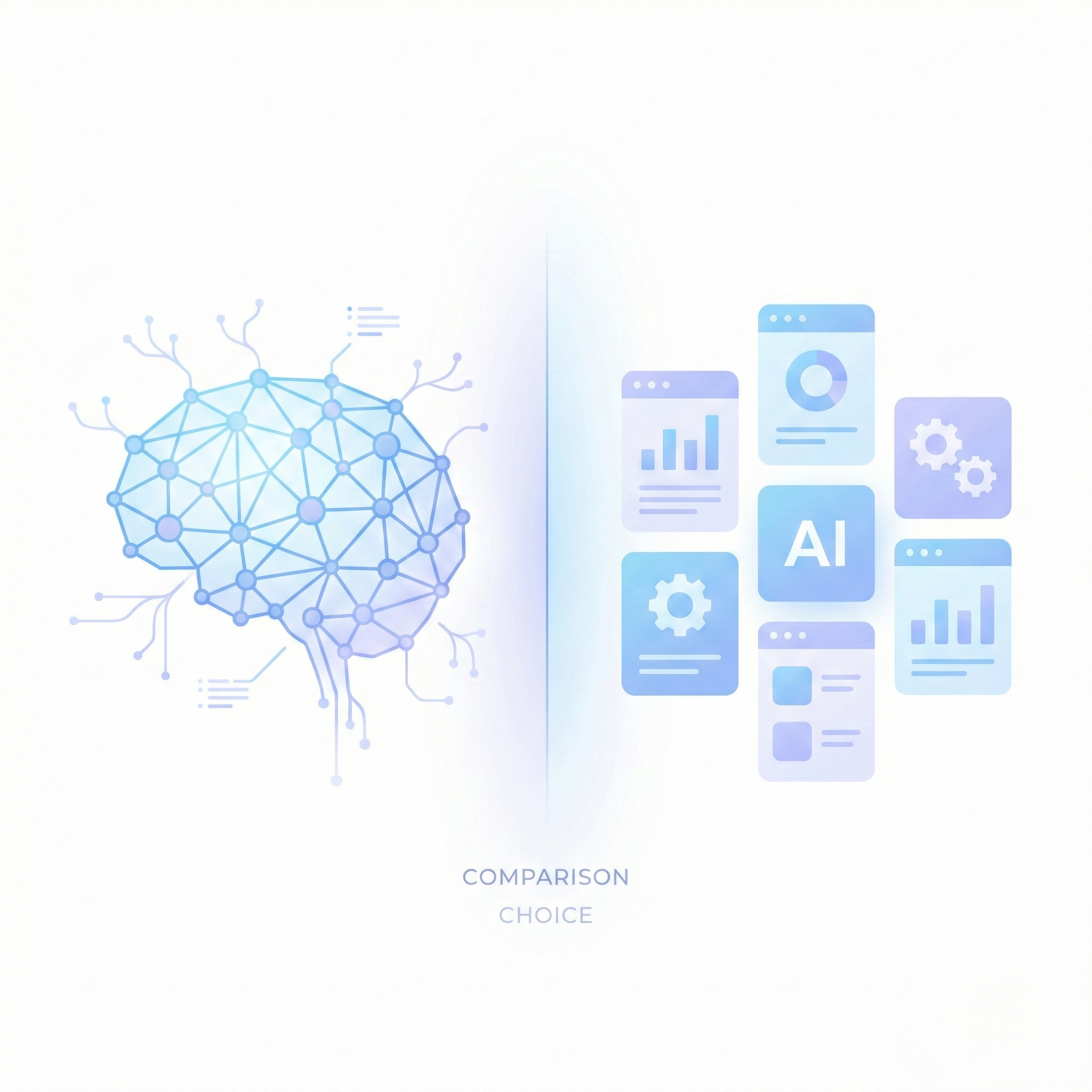
AI-powered software is not limited to deep learning. The choice of approach depends on the problem, data, and operational requirements.
Typical options include:
Machine Learning models for structured data and prediction tasks
Deep Learning models for vision, speech, and natural language processing
Hybrid systems combining rules-based logic with AI models
Pre-trained models fine-tuned for specific business contexts
Enterprise solutions often favor:
Interpretability over raw accuracy
Stability over experimental performance
Models that can evolve as data and requirements change
The goal is not building the most complex model—but the most reliable one.
Building AI Into Software Architecture
AI becomes valuable only when embedded into real systems.
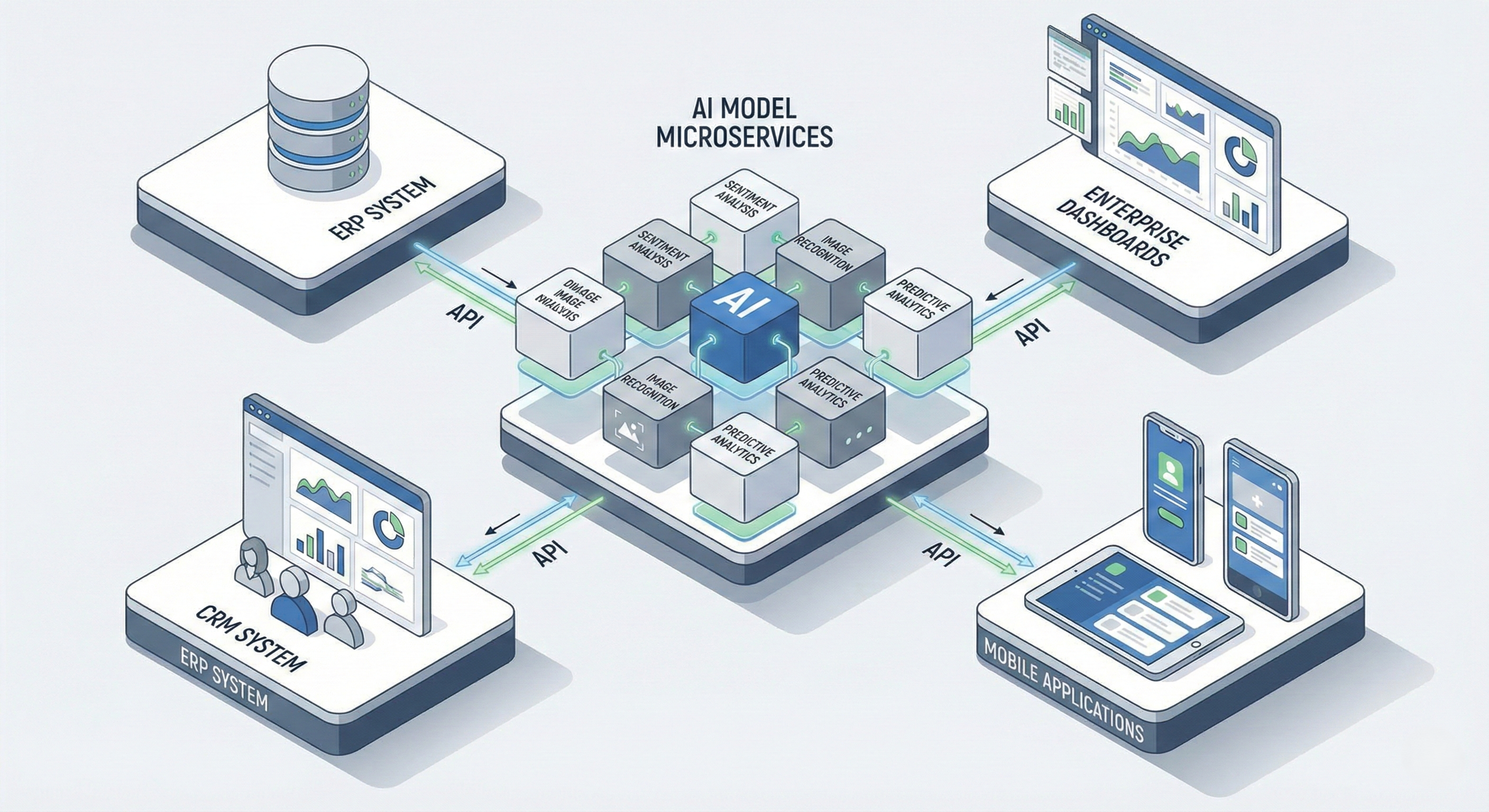
This means integrating AI components with:
ERP systems
CRM platforms
Internal dashboards
Mobile and web applications
Automation and workflow tools
Key architectural considerations include:
API-based model access
Latency and performance requirements
Failover and fallback mechanisms
Separation between AI logic and application logic
Well-designed AI software treats models as services, not isolated experiments.
Enterprise Deployment and Scalability
Deploying AI in production environments introduces new challenges beyond development.
Enterprise deployment requires:
Model versioning and lifecycle management
Continuous monitoring of model performance
Scalability under varying workloads
Automated retraining and updates
Robust logging and observability
Cloud-native architectures, containerization, and MLOps practices play a critical role in ensuring AI systems remain stable, maintainable, and cost-efficient over time.

Security, Compliance, and Governance
As AI systems increasingly influence business decisions, governance becomes essential.
Enterprise AI solutions must address:
Data privacy regulations
Access control and authentication
Auditability of AI decisions
Bias detection and mitigation
Model explainability for stakeholders
AI governance is not a blocker—it is an enabler of trust, adoption, and long-term scalability.
Measuring ROI and Business Impact
AI-powered software must deliver measurable value.
Common KPIs include:
Operational cost reduction
Productivity gains
Error rate reduction
Faster decision cycles
Improved customer satisfaction
Continuous evaluation ensures that AI systems remain aligned with evolving business goals and justify ongoing investment.
Long-Term Value of Custom AI Software
Unlike generic AI tools, custom AI-powered solutions:
Align tightly with internal processes
Adapt as the business grows
Integrate seamlessly with existing systems
Provide strategic differentiation
For enterprises, AI is not a one-time project—it is a long-term capability embedded into software, operations, and decision-making.
Conclusion: Turning AI Into a Business Asset
AI delivers real value when treated as a core part of software strategy, not an isolated experiment. From idea validation to enterprise deployment, successful AI-powered software solutions require a deep understanding of business needs, data, architecture, and long-term scalability.
Organizations that invest in well-designed AI systems today are not just automating tasks—they are building intelligent platforms that evolve with their business.